Key events
Sunak says there was not a ‘toolkit’ to deal with the pandemic
Sunak, who had been appointed chief secretary to the Treasury in July 2019, admitted he did not have a “huge amount of time in that context” when appointed chancellor.
“I was obviously very new to senior government. And then it was a surprise to be made chancellor in the middle of February,” Sunak said.
He said his “immediate job” was to prepare a budget in the “space of a few weeks”.
Sunak told the inquiry:
As it turned out, that was really the one of the easier things I had to do, given what then unfolded over the next few days, weeks, months, and at that moment things were moving very quickly. So even during the budget preparations, it was clear that what was happening with the pandemic was escalating.
Sunak added that there was not a “toolkit” to deal with the pandemic amid a huge amount of uncertainty, including around what the public’s behavioural response would be and the potential economic impacts of lockdowns.
“There was not a playbook that you could pull off the shelf that said, well, this is how you, you know, tend to deal with pandemics in the same way you somehow have with other economic shocks or financial shocks.”
Sunak will be asked about a range of issues today including preparedness, the economic shock the country faced, funding for the devolved administrations, the Coronavirus Job Retention Scheme, the self-employed income support scheme, the economic impact of Long Covid, loans and the uplift to both the universal credit and working tax credits.
This is Sunak’s second appearance at the Covid inquiry.
Sunak confirmed that he was appointed as chancellor on 13 February 2020. He says he looks forward to providing evidence today and extends his condolences for all those who lost loved ones due to Covid during the pandemic. He said the inquiry should help with the UK’s preparedness in the future.
Covid inquiry starts with Sunak set to be grilled over economic response to pandemic
The hearing in Dorland House in central London, where the Covid inquiry is taking place, has just started.
You can watch the broadcast of today’s hearing in this feed, which is also attached to the top of the blog. We are expecting Sunak to appear in about ten minutes or so:
The Covid inquiry, which, according to the IFS, is likely to end up costing in excess of £200m, got under way in 2022 and its final report is not expected until 2027.
It covers decision-making by the UK government, and the administrations in Scotland, Wales and Northern Ireland, across a range of topics, including procurement, the care sector, children and young people, vaccines and the impact the pandemic had on the healthcare system.
Rishi Sunak will be grilled on the government’s economic response (module 9).
Just under 227,000 people in the UK died with Covid-19 listed as one of the causes on their death certificate between March 2020 and May 2023.
The pandemic caused a severe recession, with a huge drop in GDP during the first national lockdown in 2020.
As part of the Coronavirus Job Retention Scheme, known as furlough, the government subsidised the wages of employees hit by the pandemic as sectors – such as hospitality, nightclubs and the travel industry – closed down to prevent the virus from spreading.
This massive level of state intervention covered about 11.7 million jobs between March 2020 and September 2021, at a cost of roughly £70bn.
The Covid inquiry has previously heard that furlough is estimated to have directly preserved four million jobs across the UK workforce.
The Treasury has estimated that total spending by the government across all its support measures amounted to £373bn.
Rishi Sunak to face questions on economic impact of the Covid pandemic
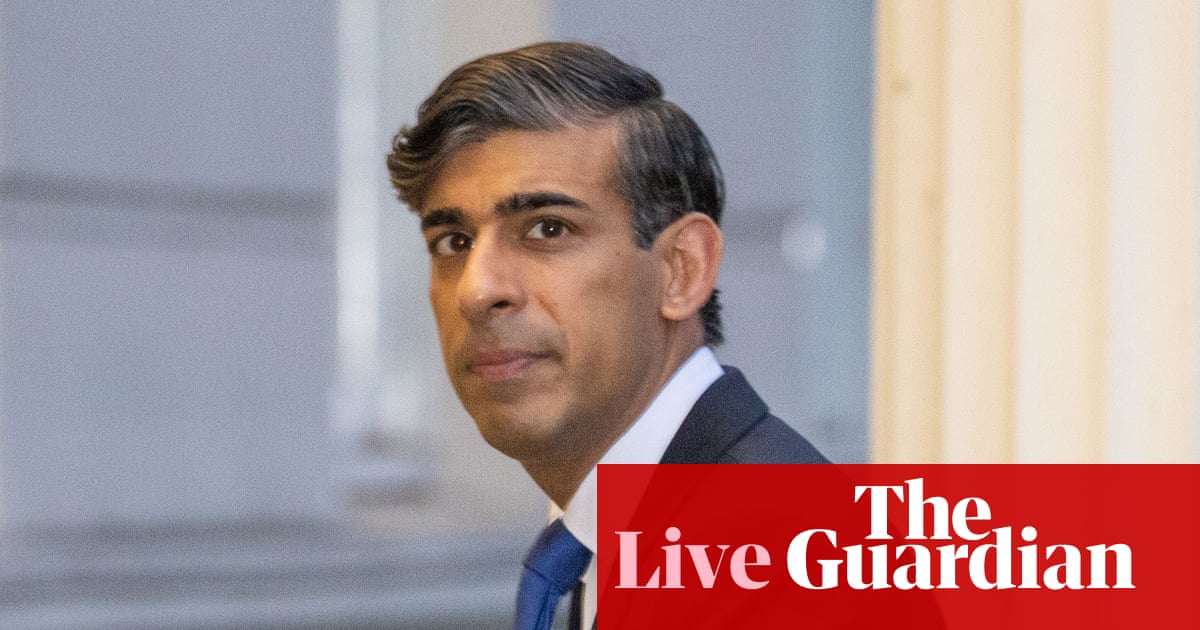
Former British prime minister, Rishi Sunak, is to give evidence at the Covid-19 inquiry today as it looks into the government’s economic response to the pandemic.
Sunak, who was chancellor at the height of the pandemic, has previously defended his “eat out to help out” scheme, rolled out in the summer of 2020, saying it prevented job losses.
He has denied that the £850m policy – which gave diners a state-funded £10 discount – drove a second wave of Covid infections, despite research showing it caused a rise of between 8% and 17%, while the economic benefits of the scheme were short-lived.
Sunak is due to be questioned between 10.30am and 4.30pm (with a lunch break), so stick with us as we provide you with the latest lines. We will have a feed attached to the top of the blog shortly.
